
Proximity Builds Empathy
Proximity Builds Empathy
By Megan Bostic, Editor Kiara Moore
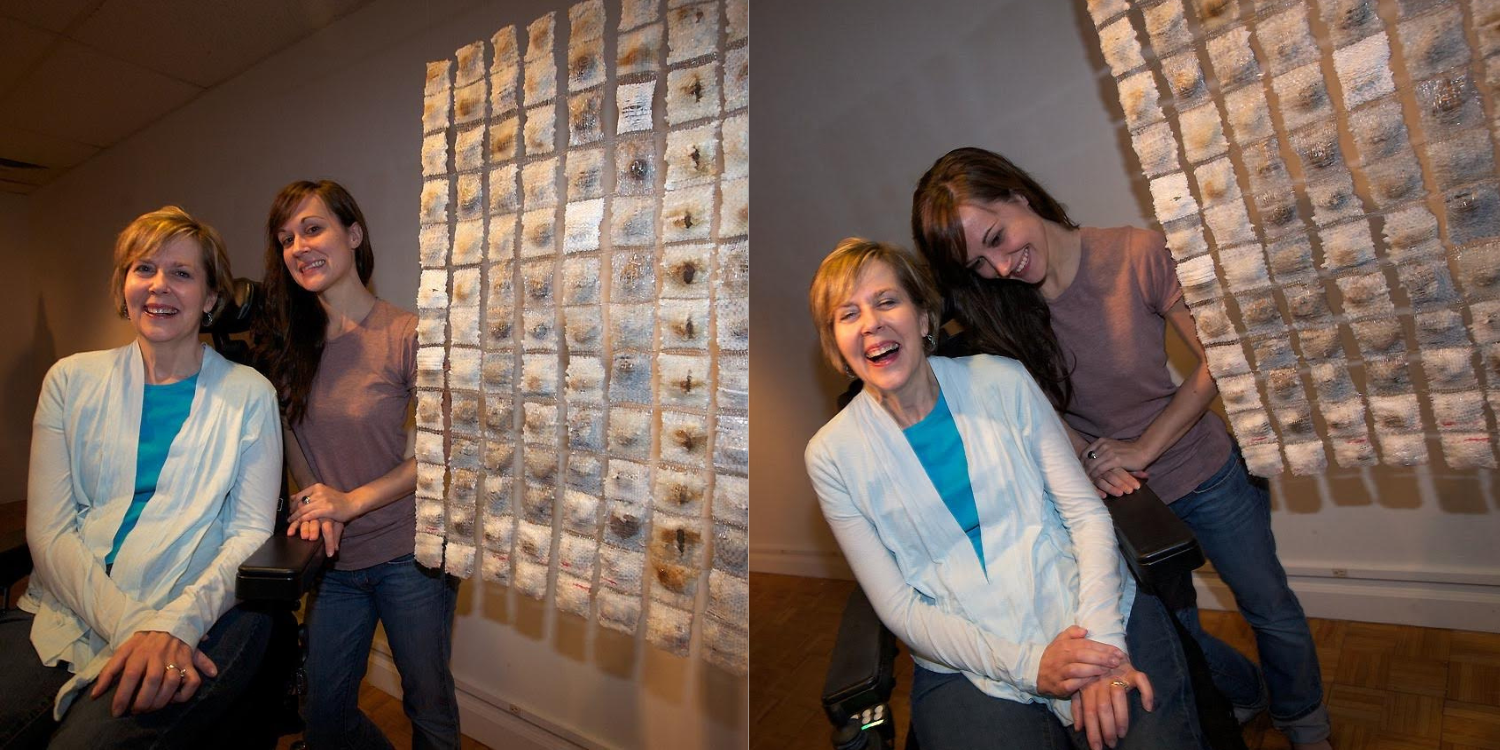
Before I came to NCNG, I worked at a small arts and disability nonprofit. One of the inclusion advocates we partnered with, John Samuel, had a go-to phrase he employed during trainings:
“Proximity builds empathy.”
That phrase has stayed with me since the first time I heard John say it. Sometimes the proximity happens in the course of our work as it did for me through that role – working closely with disabled artists to make the arts more accessible and inclusive.
Sometimes the proximity occurs in our personal lives long before we have the language to understand what it is teaching us. Before any of the jobs on my resume, I was an undergrad student at East Carolina University. I decided to stay close to home in Greenville when my Mom was diagnosed with ALS during my senior year of high school. This was before the Ice Bucket Challenge, when you had to explain what ALS was to most people. That viral campaign later brought visibility and research funding, but in 2004 the disease was largely invisible.
My Mom, Jill, was a woman of faith and optimism. She was honest to nearly a fault, made friends in any room she entered, and believed so deeply in the good in all people that she practically willed it out of them. She didn’t “love” things; she “love, love, loved!” them. After her diagnosis, she held bravery and fear at the same time. She also turned outward, raising money and awareness for ALS through fundraising walks, advocacy trips to DC, and even through an interview on WUNC’s mid-aught’s “The Story with Dick Gordon”.
Over six years with ALS, my mom’s access needs kept changing as she utilized most mobility devices – leg braces, a cane, a rollator, scooter, manual wheelchair, and then a powerchair. She started banking her voice so that if she lost the ability to speak, she could communicate through an assistive device.
I ended up moving back in with my Mom and step-dad during the last year of her life in 2010. Living alongside her, I saw up-close and in real-time how inaccessible and exclusive the world is to disabled folks – and how often that inaccessibility gets ignored or overlooked. It was an overdue awakening for me, not to a new reality, but to the realities that disabled people had always known and lived with.
That experience changed what I notice. Accessibility and inclusion stopped feeling like a specialized concern and became a way of seeing who an organization expects to participate, whose needs it anticipates, and which barriers it’s willing to remove. I carried that with me as a high-school teacher, as a nonprofit arts administrator, and to my role at NCNG, where our understanding of inclusion continues to evolve and grow.
“Whenever you make things more accessible for one person, you make things more accessible for everyone.”
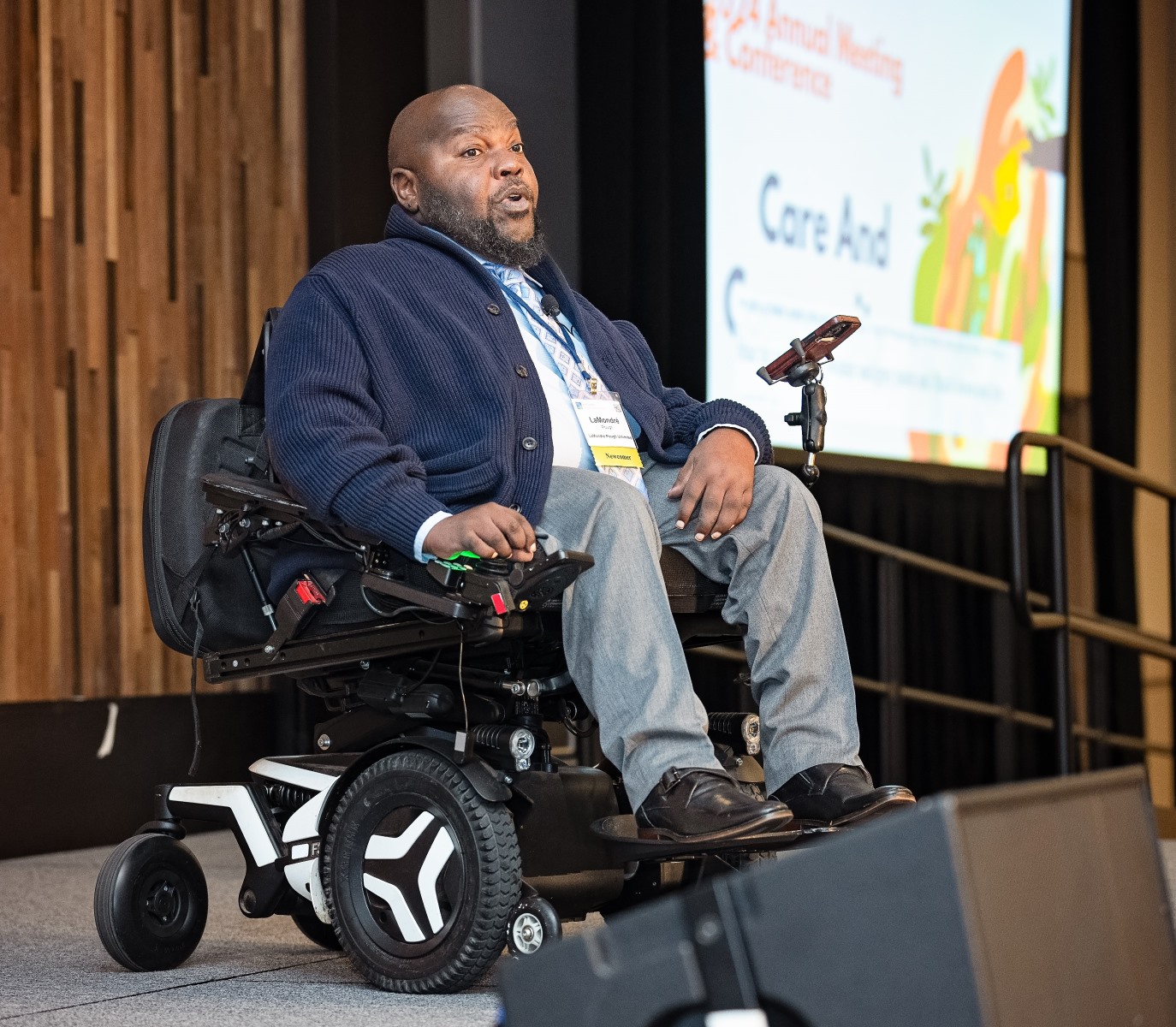
One of my proudest moments in my role as Program Director at NCNG was inviting LaMondré Pough speak at our 2024 Annual Meeting and Conference. From the stage, LaMondré visually described himself from the stage as a bald, black man in a power wheelchair. He went on to share his personal story with disability – being diagnosed at a young age with spinal muscular dystrophy, facing the challenges of an inaccessible school, and being supported by a mother who was determined to do the best for him. Then he challenged us, “We enter things with good intentions. But we have a tendency to align ourselves to things and people that are similar to us. That limits us.”
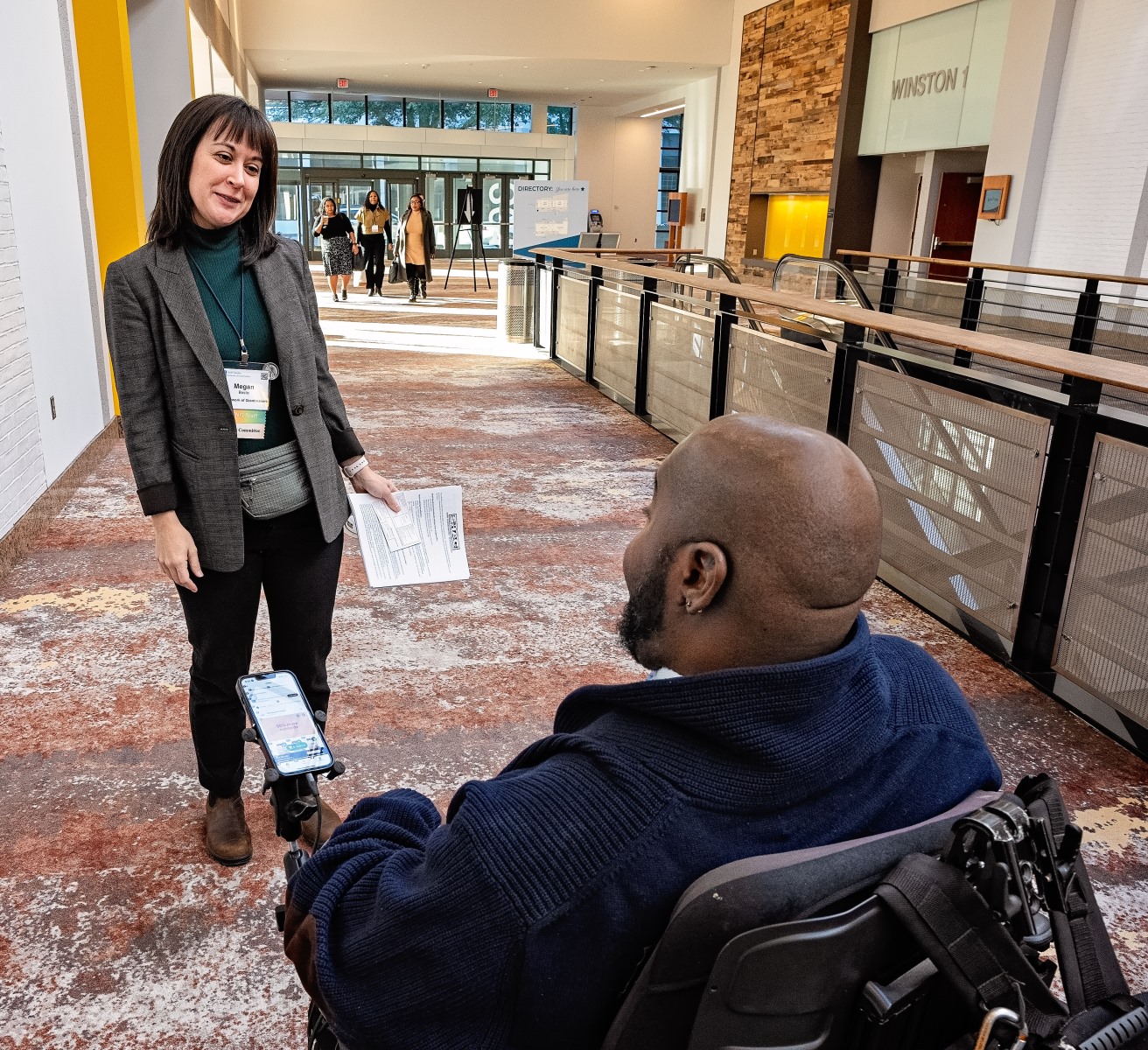
LaMondré’s story and sincerity stayed with people after the conference, but so did his challenge to rethink whom we design for. He used the bell curve to make the point: “Instead of designing for the hump in the middle of the bell curve, design for the margins. If you design for the margins, you get everyone! When you make things more accessible for one person, you make things more accessible for all.”
“Seek to understand. And then engage.”
In 2023, NCNG signed the Disability & Philanthropy Forum’s Disability Inclusion Pledge, committing to an ongoing learning journey. The pledge includes action items and an annual survey to gauge your progress. It has made visible where we have more work to do: There NCNG has built strong practices like hosting accessible events and asking for accommodations, but work such as inclusion audits and surveys continues to stall. That gap between intention and practice is a part of our learning, too.
I invite you to continue learning with me and with us at NCNG. If you’re brand new to disability inclusion and accessibility, welcome! The Disability & Philanthropy Forum is an excellent place to start. Check out one of their blog posts , attend one of their webinars or simply follow their LinkedIn. In 2026, NCNG went a step further to become a member of the Disability and Philanthropy Forum – to help build a future where disability inclusion is embedded in the sector. You can learn more about membership here.
For those of you, like me, who have lived a non-disabled life so far in the middle of the bell curve – death and taxes are the inevitable things we joke about, yes. But also, if you’re lucky to live long enough, disability too. It’s a natural, normal part of life. And the more we advocate for and fund accessibility and inclusion now, the better off we’ll all be.